The FBI's Thrilling Cases at Munich's LMU University Hospital
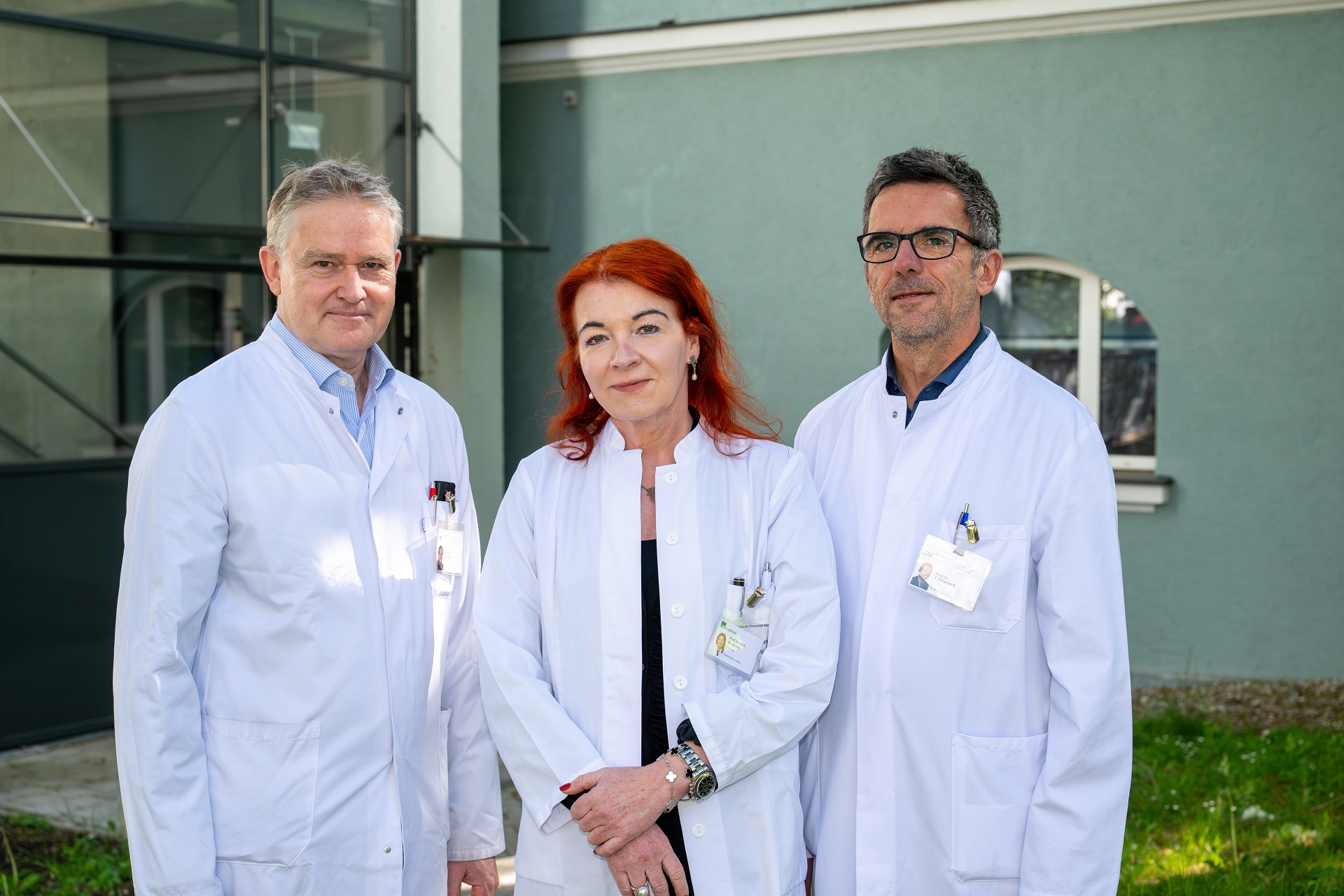
“The Friedrich Baur Institute stands for outstanding neurological care, scientific excellence, and patient-centered care of the highest standard, with a reputation that extends throughout Germany and beyond,” says Prof. Dr. Günter Höglinger, Director of the Department of Neurology and of the Friedrich Baur Institute at LMU University Hospital Munich.
And this has led to tangible success for those affected: Neuromuscular diseases were long considered the stepchildren of medicine—rare, complex, and virtually untreatable. But that has changed fundamentally in recent years: “Where once there were only diagnoses with no therapeutic prospects, disease-modifying therapies now open up real treatment options,” explain the institute’s senior physicians in a joint statement (see box below). They continue: “The Friedrich Baur Institute has not only kept pace with these global advances but has also actively helped shape them.”
A Wide Range of Care for Specific Clinical Conditions
Today, effective treatments are available for spinal muscular atrophy, SOD1-associated familial ALS, Duchenne muscular dystrophy, myotonic dystrophies, limb-girdle muscular dystrophies, Friedreich’s ataxia, and neuropathies associated with hereditary ATTR amyloidosis or Fabry disease. Likewise, a wide range of therapeutic options is available for non-hereditary neuromuscular disorders such as myasthenia gravis, inflammatory myositis, and immunogenic neuropathies.
The Friedrich Baur Institute in Numbers
- Employees (current): 60
- Ongoing studies: 34
- External funding (BMBF, DFG, etc.): approx. 1 million annually
- Current case numbers: 3,600 outpatients annually, 1,300 inpatients annually
- Available beds: 24 inpatient, 3 day-care
The Friedrich Baur Institute was originally founded on June 8, 1956, to treat and conduct research on a single disease: polio. At that time, the generous endowment from the Upper Franconian entrepreneur Dr. med. h.c. Friedrich Baur—a pioneer of modern mail-order business—and his wife Katharina made the institute’s founding possible.
To this day, the Board of Trustees of the Friedrich Baur Foundation, under the leadership of Dr. Georg Freiherr von Waldenfels, determines the amount of annual grants and supports the institute in the spirit of promoting research. “On such an anniversary,” said von Waldenfels, “our thanks go in particular to Friedrich Baur and his wife, who had the foresight and financial means to bring this institute to life. The Friedrich Baur Foundation and the Advisory Board of Friedrich Baur GmbH are mindful of their responsibility to continue providing sustainable support to this institute in the future.”
Interdisciplinarity and Interprofessionality
With the widespread introduction of the polio vaccine, the terror of polio gradually faded over the years. From then on, the FBI turned its attention to the many rare diseases of the muscles and nerves that are virtually unknown even to many doctors. These conditions are characterized by their diverse clinical presentation, often involving other organs. Diagnosis is complex and frequently involves a years-long odyssey for patients as they go from doctor to doctor.
The diagnostic process and treatment require the highly specialized knowledge of a multidisciplinary team of experts in neurology, pediatrics, orthopedics, cardiology, human genetics, physical therapy, and psychosocial care. This high level of therapeutic expertise is reflected, among other things, in the fact that the Friedrich Baur Institute serves as the headquarters of Deutsche Gesellschaft für Muskelkranke e.V (DGM) and as the Integrated Myasthenia Center (iMZ) of Deutsche Myasthenie-Gesellschaft e.V. (DMG).
The Friedrich Baur Institute also sets standards in research: Since 2005, FBI staff have published over 1,000 original papers in leading scientific journals, supported by project-based third-party funding that has amounted to approximately one million euros annually since 2009.
The doctors at the FBI are clear on how the development of new therapeutic innovations will continue to succeed in the future. “We recognized early on that patient registries and natural history studies—which track the natural course of rare diseases—are of central importance. Not only for a better understanding of the disease itself, but especially for the planning and efficient conduct of clinical therapy trials,” summarize the institute’s senior physicians.
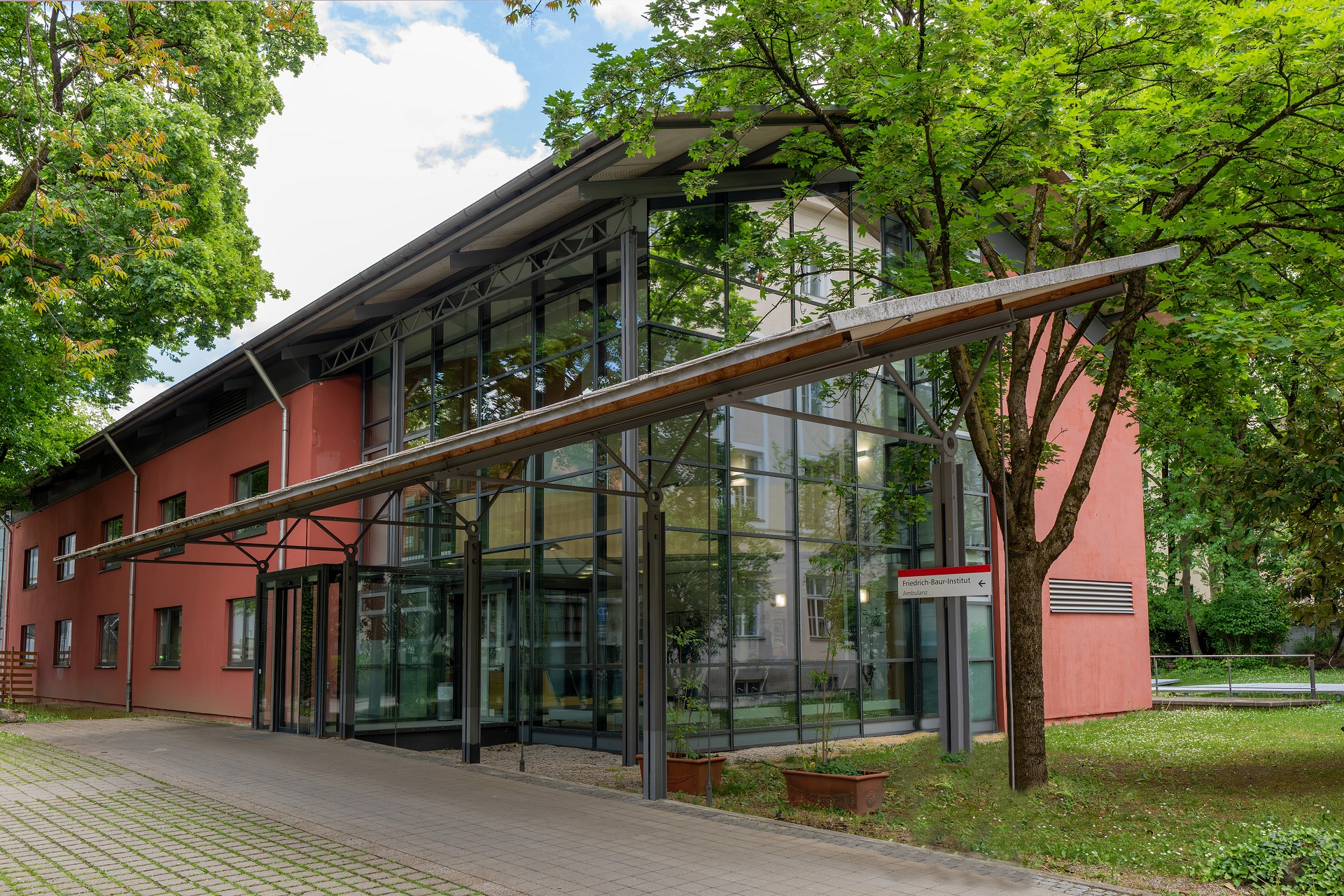
The Friedrich Baur Institute at the LMU University Hospital Munich is celebrating its 70th anniversary this year.
Center for National and International Registries and Studies
Accordingly, the Friedrich Baur Institute, often serving as the coordinating center, participates in national and international registries as well as natural history studies. These include, among others, networks on mitochondrial diseases (mitoNET, GENOMIT), Friedreich’s ataxia (EFACTS, UNIFAI), amyotrophic lateral sclerosis (MND-NET), spinal muscular atrophy (SMArtCare, national SMA patient registry), muscular dystrophies (MD-NET, Treat-NMD, national DMD/BMD patient registry), CMT neuropathies (CMT-NET), and myotonic dystrophies (national myotonic dystrophy patient registry). In addition to clinical research, the FBI is also active in basic research. Here, scientists investigate the biological causes and mechanisms underlying neuromuscular disorders to identify new therapeutic targets—in line with the “from bench to bedside” principle.
As a result, new treatment options are now available for spinal muscular atrophy, Duchenne muscular dystrophy, myotonic dystrophies, limb-girdle muscular dystrophies, and Friedreich’s ataxia. Likewise, a wide range of therapeutic options is available for non-hereditary neuromuscular disorders such as myasthenia gravis, inflammatory myositis, and neuropathies. This development is the result of close translational collaboration between basic research, animal models, patient registries, and clinical trials.
For Prof. Markus M. Lerch, Medical Director and Chairman of the Board of LMU University Hospital Munich, the FBI represents an ideal combination of social commitment and the excellence of university medicine. “The funding from the Friedrich Baur Foundation enables our experts at LMU University Hospital Munich to help patients who otherwise have nowhere else to turn. There are literally exciting cases to solve—just as one would expect from the FBI.”
The Senior Physicians at the Friedrich Baur Institute
- Prof. Dr. Maggie Walter (Executive Director, Revenue Management, Nutritional Medicine, Muscular Dystrophies, Myositis, Spinal Muscular Atrophy, Acquired and Hereditary Neuropathies, Congenital Myasthenic Syndromes, Patient Registries, Muscle Protein Analysis)
- Prof. Dr. Benedikt Schoser (myotonias and myotonic dystrophies, metabolic myopathies, lysosomal storage disorders, myasthenia gravis, palliative care, patient registries, muscle morphology, muscle protein analysis)
- Prof. Dr. Thomas Klopstock (neurogenetics, hereditary ataxias, NBIA, mitochondrial disorders, patient registries)
- Prof. Dr. Peter Reilich (ALS, amyloidosis, myositis, clinical neurophysiology, FEES diagnostics, palliative care, patient registries, muscle protein analysis)
- Privatdozent Dr. Stephan Wenninger (Respiratory and palliative care, myotonias and myotonic dystrophies, metabolic myopathies, lysosomal storage disorders, myasthenia gravis, myositis, clinical neurophysiology)
- Prof. Dr. Jan Senderek (Research Professorship in Neuromuscular Diseases, Hereditary Neuropathies and Myopathies, Molecular Genetics, Cell and Molecular Biology)
Contact
Prof. Dr. med. Günter Höglinger
Director of the Department of Neurology, LMU University Hospital Munich
Prof. Dr. med. Maggie Walter
Manager of the Friedrich Baur Institute at the Department of Neurology, LMU University Hospital Munich